
Written scope and surface plan
You get a clear outline of prep, thickness, edges, transitions, and how we handle drains, puddling, and tie-ins so the finished surface drains correctly.
Serving Seattle, Washington & surrounding areas
Calls are answered 24/7
Asphalt Paving · Seattle, WA
Paving and maintenance for driveways, parking lots, and private roads. Get a clear scope, clean edges, and a surface built for Seattle's wet weather and heavy use.
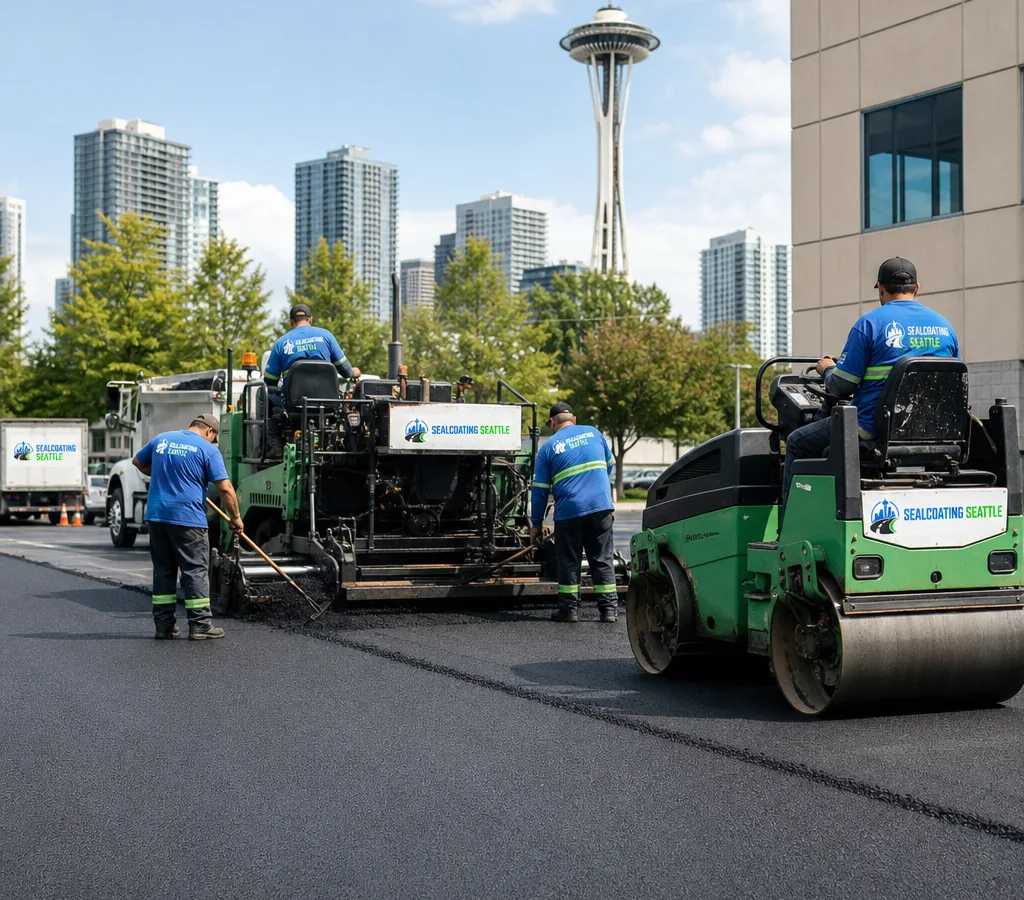
Built for local conditions
If you're searching for an asphalt company Seattle property owners can rely on, start with the basics: proper base, correct thickness, tight compaction, and drainage that moves water away from the pavement.
Sealcoating Seattle handles Seattle asphalt paving for residential and commercial sites across the city, with practical recommendations based on what we see on the ground. In older industrial blocks around SODO and the Duwamish corridor, we often run into heavier traffic patterns and oil-stained areas that need more prep. In steep neighborhoods like Queen Anne and parts of West Seattle, slope and water flow matter as much as the asphalt itself. Around Capitol Hill and Ballard, tight access and on-street parking can affect staging, timing, and how we protect adjacent concrete and landscaping.
Because asphalt Seattle surfaces take a beating from rain, standing water and clogged drains do real damage. The best way to avoid early cracking and raveling is to fix drainage and base issues before topping things with a quick patch. We'll tell you what's worth repairing now, what can wait, and what will keep coming back until it's rebuilt.
The details that protect pavement
You get a clear outline of prep, thickness, edges, transitions, and how we handle drains, puddling, and tie-ins so the finished surface drains correctly.
We remove failed material where needed, repair soft spots, and compact properly. Paving over weak areas is the fastest way to get the same cracks back.
We pay attention to asphalt-to-concrete transitions, garage approaches, and landscaping edges so the job looks finished and stays intact at the perimeter.
For driveways, alleys, and lots with daily use, we plan staging so you maintain access as much as possible while the surface cures and firms up.
Seattle rain makes drainage a performance issue. We flag low spots, settled areas, and downspout discharge points that can shorten pavement life.
Installation, repair, and renewal
Seattle asphalt projects rarely fit a single template. Some sites need a full install. Others need targeted repair work so a maintenance coat actually lasts.
Typical work includes:
If your goal is to extend life after paving, protective coatings matter. Many clients start by scheduling asphalt sealcoating in Seattle once the pavement is ready for it, rather than coating over cracks, ruts, or soft spots that should be repaired first.
When you're comparing asphalt paving Seattle WA contractors, ask how they will handle drainage and transitions. Those details decide whether your pavement sheds water or holds it.
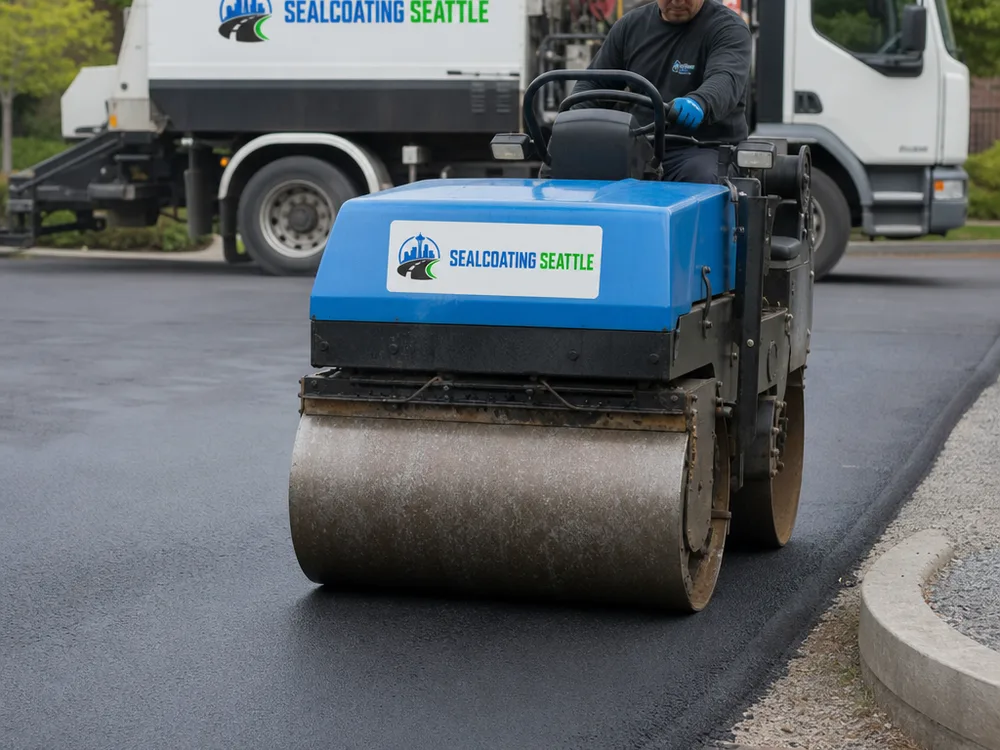
From evaluation to reopening
01
We look at surface condition, base stability, drainage paths, and access. On active lots, we also talk through staging so vehicles and deliveries can keep moving.
02
You get a written plan with recommended repair depth, paving thickness where applicable, and what we're doing at edges, transitions, and drains.
03
This can include removal, grading, adding aggregate base, proof-rolling questionable areas, and compaction. If water is feeding failures, we address that before paving.
04
We place hot-mix asphalt, compact in lifts, and finish edges and tie-ins. Good compaction is what gives the pavement strength, not just a smooth look.
05
We confirm when it's safe to drive and park, what to avoid early on, and when routine maintenance like crack filling and coating makes sense for your site.
Pricing factors
Most asphalt paving in Seattle typically ranges from about $7 to $15+ per square foot for installs or replacements, with small patching sometimes priced as a minimum service visit rather than by the foot. A simple residential driveway is often less complex than a commercial lot with drains, curbs, and staging needs.
Your final price depends on square footage, thickness, base condition, excavation and haul-off, access for equipment, drainage corrections, and how much crack or edge repair is required before any coating. Exact pricing is confirmed after an on-site evaluation of the surface and sub-base.
Customer experiences
They didn't try to sell us an overlay right away. They showed us where the base had softened and rebuilt those areas first, then paved. The lot drains better now and the edges look clean.
We have a steep driveway and were worried about water running down to the garage. They graded the approach, fixed the low spot, and the finish came out smooth without waves.
Before paving begins
Clear answers about repairs, pavement structure, weather, access, and long-term protection.
If the pavement has widespread alligator cracking, recurring potholes, or areas that feel soft and move under load, replacement of failed sections or a full rebuild is usually the right call. If the base is stable and damage is localized, patching and leveling may be enough before maintenance work. In Seattle, persistent puddling and water running toward structures is a common sign that the problem is more than surface wear.
Thickness depends on use: passenger-car driveways need less structure than lots that see delivery vans and heavier vehicles. A qualified asphalt contractor will specify thickness by expected traffic and confirm whether the base can support it. Thickness and compaction must match the site conditions because thin asphalt over a weak base fails quickly even if it looks new on day one.
You can often drive on new asphalt within about 24 to 48 hours, but full curing takes longer and the surface is more vulnerable early on. Tight turns in place, kickstands, and parked heavy vehicles can leave marks during the early cure window. We give site-specific guidance based on temperature, shade, and how the area will be used.
Paving is weather-dependent. Asphalt needs dry conditions and appropriate temperatures so it can be placed and compacted correctly. Seattle's rain can interrupt scheduling, so we plan around forecast windows and keep communication tight when conditions change.
We handle commercial paving scopes that include lot paving and the details that make it function, such as curb transitions, catch basin adjustments when needed, and traffic staging. If your project also requires paint striping, we can coordinate timing so the surface has the right cure window before layout work begins.
Sealcoating should go on after the pavement has had time to cure and after cracks and failed areas are repaired, not as a substitute for repair. The right timing depends on the mix, season, and how the surface is used. If protecting the surface is a priority, we'll outline a maintenance timeline during the site visit so you're not coating too early or waiting too long.
Start with an on-site look
Tell us what you're working with, where it's located, and how the surface is used. We'll confirm whether repair, overlay, or replacement makes sense and provide a written scope that fits your property.
Free estimates
Call (206) 222-6342 or send the details below. We will arrange a walk-through, measure the surface, and come back with a written scope.